It sounds strange to say, but a septic system is a beautiful thing – as long as it’s installed right and properly functioning.
Why?
A septic system is an economical technology using natural processes for disposing of household drain waste on-site. Septic systems make off-grid and rural living feasible for many families.
But how does a septic system work? What’s involved in septic system installation? What type of maintenance do septic systems need? Is a septic system the solution for your home building situation?
How Septic Systems Work
A waste disposal system is a small, self-contained wastewater treatment facility. Millions of homes in rural areas utilize these systems. Whether you live in a mobile home, house, mansion, or even off-grid, if your living rurally, you more than likely have one for proper disposal of your sewage.
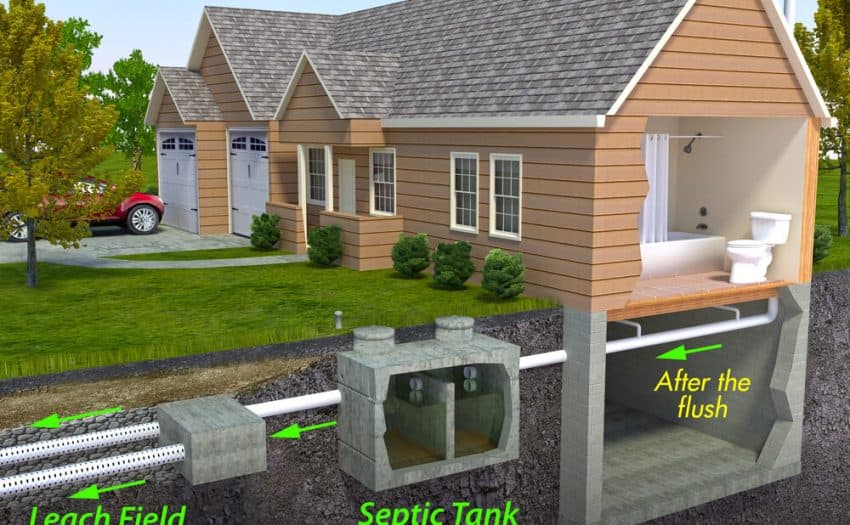
Septic systems use natural bacteria to break-down waste products and then safely disperse the effluent into the sub-surface soil through a septic drain field.
A Septic System Consists Of:
- A Holding Tank
- typically with a capacity between 500 and 2,500 gallons, depending on the size of the house it serves
- The Septic Leach field
- consisting of perforated drain pipes, set horizontally in trenches near the tank. The size of the septic leach field is determined by the size of the tank and how well the soil drains.
- Drain Pipes
- which connect sinks, toilets, baths, showers, dishwashers, and laundry rooms to the holding tank
When septic system installation is complete and in use, the tank starts collecting natural bacteria that digest the waste materials. Digested solid matter sinks to the bottom of the tank, and liquid effluent discharges into the septic leach field where the soil absorbs it.
In other septic systems where natural drainage conditions are not adequate, the builder may need to bring in sand or organic matter to the site for the leach field. In this system, a pump may also be necessary to disperse the wastewater from the septic tank into the drainage area.
Home builders all over the world have been installing septic tanks for over 150 years, and they have proven safe and effective as long as they are properly designed, installed, and maintained.
Installing Your System
Installing a septic system starts with getting a soil percolation test to see how well the soil drains. Next, the system must be designed for the size of the house and the number of occupants. Then the builder can apply for a permit.
Once the permit is approved, installing a system in rather fast. It only involves digging a hole for the holding tank and placing it at the correct level. Then, digging the leach field and installing the pipes. And connecting the system to the house. Then ultimately, back-filling and compacting the excavation site.
Maintaining Functioning Septic Systems
Septic systems usually require little maintenance except:
- Occasional pumping out of the tank
- Keeping lids and access ports clear
- Not overloading the system with too much water
This last maintenance point for septic tank care comes down to being water-use-wise in your household, a goal for most people anyway.
To keep a septic system working at its best, follow these guidelines:
- Flush only toilet paper down the toilet
- Do not use any chemical in sinks, toilets, or drains except those labeled ‘septic system safe’
- Use the garbage disposal minimally or not at all
- Avoid parking over the septic leach field
- Do not use septic system additives
- Keep water from gutters, landscape, and hot tubs out of the septic tank and drain field area
Sewage Disposal System Repair
Old septic systems may develop problems and need repair or replacement.
Signs of trouble with a septic system include:
-
Blocked drains
-
Grass or weeds growing taller over the drain field than the surrounding vegetation
-
Foul odors near the holding tank or drain field
-
Water seepage in basements near a system
If you have a sewage disposal system and start noticing these symptoms, contact a septic repair professional as soon as possible. A septic systems expert can also help you locate a tank and drain field if you don’t know where they are on your property.
Are You on a Septic and Don’t Know It?
Sometimes people buy a home in the country and don’t realize it’s on a septic system. If you are unsure, look at your property tax or water bill and see if it includes a fee for municipal sewer services. If there is no such charge, you are most likely on a septic system. Many homes with septic systems are also on water wells, so that’s another clue.
Local Help with Sewage Disposal System Installation and Repair
If you want to find out more about installing a new system or repairing an old one in Knox County or Hancock County, Maine, contact Luther’s Home Building & Excavation in Isle au Haut at 207-610-9159
Luther’s is local. And most importantly experienced, reliable, and best septic system installation, excavation, and home building expert.


